
“Circularity is no longer optional; it is an economic and societal necessity”

Juha Ylä-Autio, chief executive officer of excellence finland, explains the importance of the circular economy in an interview with DGQ. He also mentions the most important levers for the further establishment of the circular economy in Europe and the skills that employees in companies need.
Why is the circular economy no longer just “nice to have,” but strategically important for companies today?
Juha Ylä-Autio: The circular economy has moved from an environmental aspiration to a strategic business priority. Three forces drive this shift: regulatory pressure, cost volatility in materials and energy, and rapidly rising customer expectations. Companies that integrate circularity into their core business – rather than treating it as a side project – strengthen resilience, reduce dependency on scarce resources, and improve long-term competitiveness.
I have worked on circular economy issues for more than ten years, and I have seen firsthand what happens when the system breaks down: the waste mountains around cities such as Milan, Rome and other large European urban areas underline how the linear model has reached its limits. We simply cannot continue along that path. Circularity is no longer optional; it is an economic and societal necessity.
Can you share examples of companies that have already gained a competitive advantage by implementing circular economy practices?
Juha Ylä-Autio: Several Finnish and European companies demonstrate this clearly. In Finland, industrial and construction companies recovering steel, concrete and other secondary materials are already reducing costs and winning tenders because circularity is embedded in their operations. In Europe, manufacturers designing long-life, repairable and modular products benefit from recurring revenue streams through service-based business models. Their advantage comes not only from sustainability, but from efficiency, reliability and lifecycle performance.
How can the circular economy be implemented along international supply chains?
Juha Ylä-Autio: Three elements are decisive: transparency, standardization and collaboration. International supply chains must evolve from transactional steering to data-driven partnerships. Digital traceability – material passports, lifecycle data and harmonised reporting – allows companies to understand where materials originate and where they end up. When key suppliers share data and commit to joint improvement targets, circular practices become scalable across borders.
What are the most significant regulatory developments at the EU level that are relevant to the circular economy?
Juha Ylä-Autio: The most influential developments are the Circular Economy Action Plan (CEAP), the Eco-design for Sustainable Products Regulation (ESPR), the revisions to the Waste Framework Directive, and the increasing pressure from taxonomy-linked disclosure requirements under CSRD. These frameworks shift responsibility upstream: design, durability, repairability and data transparency are now compliance topics. They will reshape European industries significantly before 2030.
How would you describe the current level of circular economy implementation in Finnish companies?
Juha Ylä-Autio: Finland performs strongly on strategy, innovation and collaboration, but implementation varies by sector. Large industrial companies – forestry, metal, energy and construction – have integrated circularity into investment decisions and operational processes. SMEs are motivated but uneven in practice, often due to limited resources or lack of data. The foundations are solid, but scaling and commercialization remain key challenges.
What differences do you observe across European countries? Are there any national or regional particularities?
Juha Ylä-Autio: Nordic countries lead in digitalization, regulatory readiness and cross-sector cooperation. Germany and the Netherlands are strong in industrial-scale technical solutions and market-driven circular models. Southern Europe is progressing but faces structural challenges, although regulatory pressure has accelerated movement. The key differentiator across the EU is capability: data availability, ecosystem maturity and investment capacity matter more than ambition alone.
Which political or market conditions at the EU level could facilitate or accelerate the implementation of the circular economy?
Juha Ylä-Autio: Three conditions would provide immediate acceleration:
- More harmonised standards for reporting, material passports and product requirements.
- Incentives for secondary materials, reducing barriers to reuse, repair and remanufacturing.
- Clear integration of circular criteria into public procurement. When EU markets consistently reward long-lasting and resource-efficient products, companies will scale circular investments more rapidly.
How do you see the relationship between the circular economy, quality and quality management?
Juha Ylä-Autio: Quality management is the operational backbone that makes circularity viable. Circular business models require reliable processes, stable performance and consistent data across extended value chains. Without strong quality systems, circular initiatives remain pilots; with them, they become repeatable and profitable. In many ways, circularity is fundamentally a quality challenge: designing systems that maintain value for as long as possible.
With that in mind, how are skill requirements for employees changing—and how can training, knowledge transfer or collaboration support this transition?
Juha Ylä-Autio: Skill requirements are shifting rapidly toward lifecycle thinking, systems understanding, data competence and cross-functional teamwork. Circularity is no longer the responsibility of sustainability departments alone—it affects product development, procurement, logistics, maintenance and leadership.
Training, networks and international collaboration are essential to support this transition. They help companies translate regulation into practice, build shared understanding and develop the capabilities necessary for circular business models.
After more than a decade working with circular economy themes, one conclusion is clear: the transition succeeds only when organisations build the skills and habits that make circularity part of everyday work—not an exception.
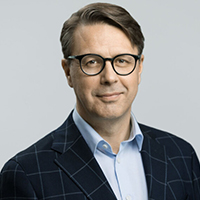
Über den Interviewpartner:
Juha Ylä-Autio ist seit 2020 Chief Executive Officer der finnischen Qualitätsgesellschaft excellence finland. Zuvor war er seit 2003 in der finnischen Schifffahrtsindustrie in verschiedenen Geschäftsführungspositionen tätig, ehe er 2011 in den Bereich der Kreislaufwirtschaft wechselte.
